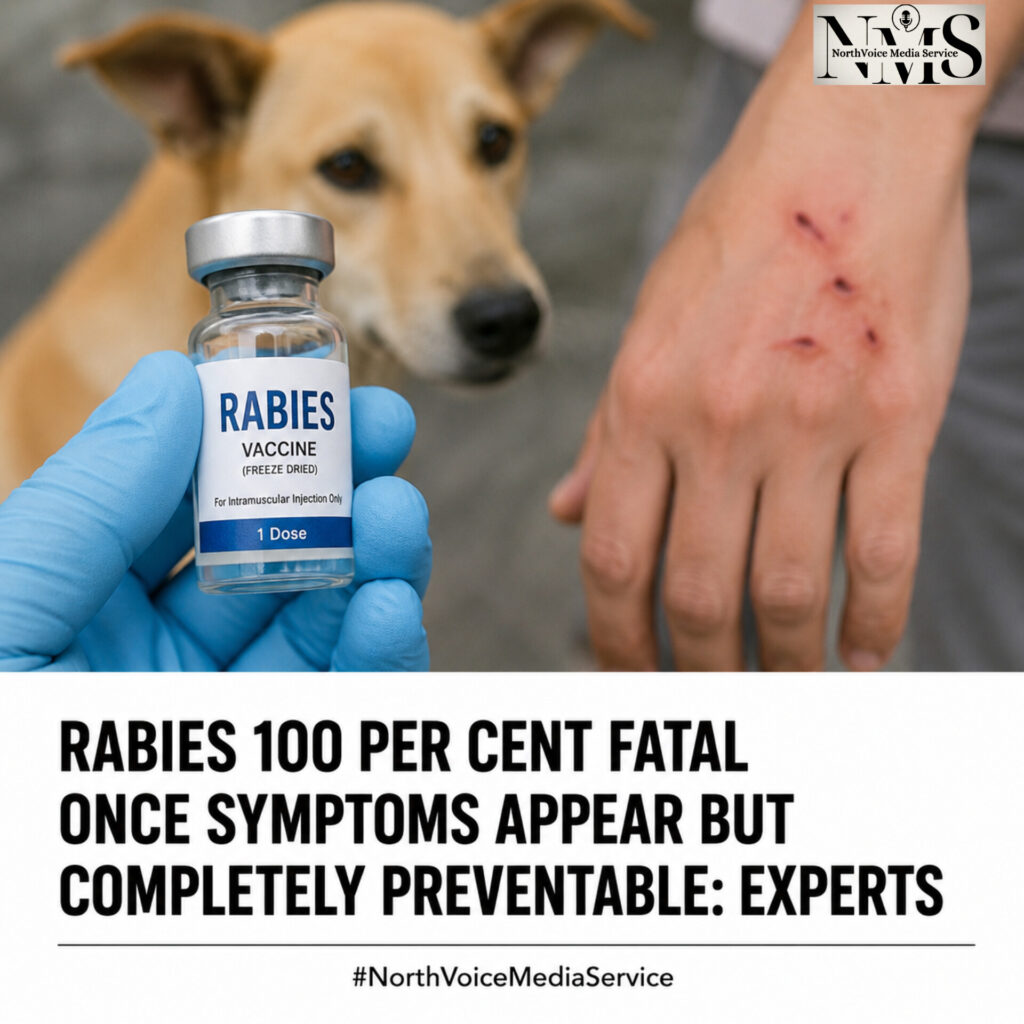
SRINAGAR: With dog bite cases in Jammu and Kashmir continuing to be reported from both urban and rural areas, health authorities have intensified their rabies awareness campaign, urging people to seek immediate medical treatment after any animal bite, scratch or exposure.The Anti-Rabies Clinic at SMHS Hospital Srinagar, functioning under the Department of Community Medicine, Government Medical College Srinagar, has launched a fresh awareness drive highlighting the dangers of rabies infection, the importance of rabies vaccination, and the urgent need for timely medical intervention.Medical experts describe rabies as one of the world’s deadliest viral diseases, affecting the brain and nervous system of both humans and animals. According to doctors, rabies is 100 per cent preventable but nearly 100 per cent fatal once symptoms appear, making early treatment crucial for survival.Health officials said India records more than 17 million animal bite cases annually, with nearly 96 per cent of human rabies deaths linked to dog bites. The continued rise in dog bite incidents has made rabies prevention, anti-rabies vaccination and public awareness key priorities under the national goal of achieving Zero Human Deaths from Dog-Mediated Rabies by 2030.In Jammu and Kashmir, most rabies exposure cases are linked to stray and domestic dogs. Experts warned that every dog bite, animal scratch or lick on broken skin should be treated as a potential rabies exposure and should never be ignored.“Rabies is a medical emergency. Waiting for symptoms or relying on traditional remedies can be fatal. Immediate wound washing and timely rabies vaccination can completely prevent the disease,” health officials said.According to medical experts, the rabies virus spreads through the saliva of infected animals. Besides dogs, rabies can also be transmitted by cats, monkeys, foxes, jackals, wolves, mongooses, bats, goats and cattle through bites, scratches or contact with broken skin and mucous membranes.Doctors advised people to immediately wash any dog bite wound or scratch with soap and running water for at least 15 minutes and apply an antiseptic such as povidone-iodine. Proper wound care significantly reduces the risk of rabies infection and is considered the first line of protection.Health authorities emphasised that Post Exposure Prophylaxis (PEP), including anti-rabies vaccine and Rabies Immunoglobulin (RIG) in severe cases, remains the most effective method of preventing rabies after exposure. Experts also recommended Pre-Exposure Prophylaxis (PrEP) for veterinarians, animal handlers, healthcare workers and other high-risk groups.The Health Department urged pet owners to ensure regular pet vaccination, routine veterinary check-ups and responsible pet ownership practices to help reduce the risk of rabies transmission.Officials reminded the public that rabies cases and animal bite incidents must be reported to the nearest health facility for timely treatment and disease surveillance. They also advised people to complete the full course of anti-rabies vaccination prescribed by doctors and never ignore even minor bites or scratches.Reiterating the core message of the National Rabies Elimination Programme, experts said awareness, immediate wound care and timely rabies vaccination remain the strongest weapons against one of the world’s most deadly yet preventable diseases.For assistance and guidance, people can contact the Rabies Helpline 15400, a toll-free service established to support rabies prevention and management efforts across the region.
Leave a Reply