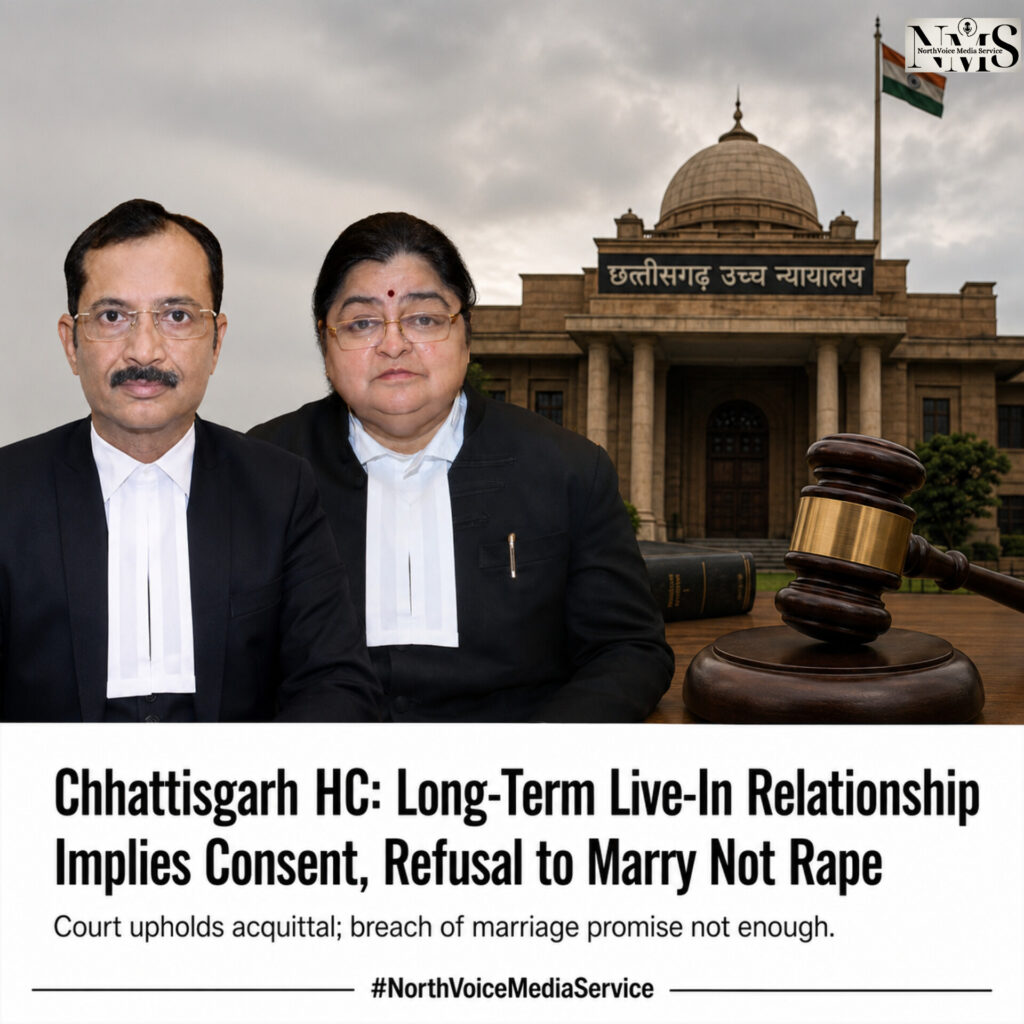
New Delhi: In a significant ruling on rape on the false promise of marriage, the Chhattisgarh High Court has upheld the acquittal of a man accused of rape, observing that a long-term consensual live-in relationship creates a presumption of consent and that a subsequent refusal to marry, by itself, does not amount to the offence of rape.A Division Bench comprising Justice Rajani Dubey and Justice Radhakishan Agrawal dismissed an appeal challenging the trial court’s acquittal. The Bench held that a prolonged consensual relationship between two adults cannot be treated as rape merely because the relationship later ends without marriage.The Court clarified that in cases involving an alleged false promise of marriage, the prosecution must prove that the promise was dishonest from the very beginning and was made solely to obtain the woman’s consent for a sexual relationship. A simple failure to fulfil a marriage promise, without evidence of deception at the outset, does not constitute rape, the Bench said.According to court records, the couple had been in a consensual relationship for several years before their proposed marriage did not materialise. The judges noted that the woman had voluntarily continued the relationship and that there was no evidence to suggest her consent was obtained through a fraudulent promise of marriage.The High Court further observed that every failed relationship or broken marriage promise cannot be converted into a rape case unless it is established that the accused never intended to marry from the outset and used the promise only to secure consent.Relying on settled Supreme Court principles, the Bench distinguished between a false promise made with dishonest intent and a genuine promise that could not eventually be fulfilled, stating that only the former can invalidate consent under criminal law.Finding no material to prove that the accused had deceived the woman from the beginning, the High Court upheld the trial court’s acquittal, ruling that the prosecution had failed to establish the essential ingredients required to prove the offence of rape.
Leave a Reply