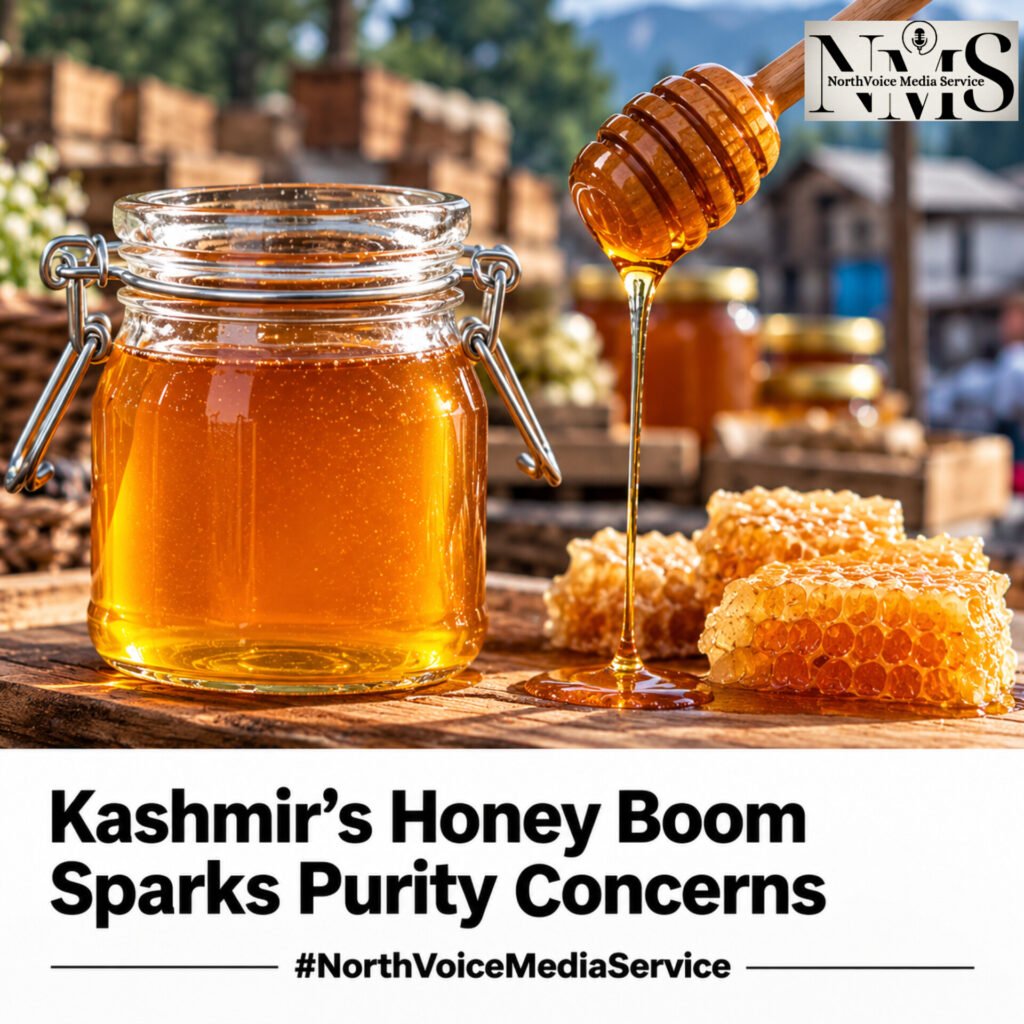
Srinagar, October 18: Jammu and Kashmir has recorded a significant rise in honey production, reaching 3,895 metric tonnes in 2025–26, up from 1,460 metric tonnes in the previous year. However, the growth of the Kashmir honey industry has also raised concerns over honey purity, adulteration and the authenticity of products sold in local markets.According to official figures presented by the Union Ministry of Agriculture in Parliament, J&K ranks among India’s top 10 honey-producing states and Union Territories. The region has 2,097 registered beekeeping entities and more than 2.17 lakh bee colonies listed on the Union Government’s MadhuKranti portal.Despite the increase in production, questions remain about how much honey marketed as Kashmir honey is actually produced within the Valley. Nearly 90 per cent of registered Kashmiri beekeepers migrate to warmer parts of India during winter.Honey’s flavour and characteristics depend on the flowers from which bees collect nectar. Kashmir acacia honey commands a premium price, but concerns persist over whether products sold under this label genuinely originate from acacia blossoms.Seasonal migration helps improve honey yields. A study found that migratory beekeeping can produce an additional 50–60 kg of honey per colony annually, nearly five times the output of stationary beekeeping.However, erratic rainfall and fluctuating temperatures have disrupted the acacia flowering season in Kashmir. Some beekeepers have reported losses of up to 90 per cent. Reduced production, combined with strong market demand, has increased concerns about possible honey adulteration.An earlier estimate by the Jammu and Kashmir Entrepreneurship Development Institute (JKEDI) placed Kashmir’s honey market at around 770 tonnes, while only approximately 75 tonnes were being processed locally at the time of the study.Honey Testing Facilities and Food Safety ConcernsHoney testing laboratories and processing facilities have been established in Pulwama, Bandipora and Jammu. Sher-e-Kashmir University of Agricultural Sciences and Technology of Kashmir (SKUAST-K) has also received a grant of Rs 4 crore for three additional honey testing laboratories in Pulwama, Kupwaraand Bandipora.Despite these measures, fake honey and sugar syrup adulteration remain major concerns for consumers. Earlier this year, authorities seized suspected fake honey made from sugar syrup at multiple locations in Srinagar.Given the size of the market, concerns remain over whether enforcement agencies can identify and seize all adulterated honey products circulating across Jammu and Kashmir.A 2020 national survey of honey found that 10 out of 13 brands failed all purity tests. The survey also indicated that samples deliberately mixed with up to 50 per cent syrup could pass certain Indian testing standards, highlighting potential gaps in conventional honey purity testing.Standard laboratory tests may not always detect sophisticated adulteration methods. Kashmir has yet to conduct a comparable comprehensive survey of honey brands sold in its local markets, leaving consumers with limited information about the authenticity of products available on shelves.Protecting Kashmir’s Honey IndustryThe growing uncertainty over pure Kashmir honey threatens genuine beekeepers and businesses that depend on the region’s reputation for quality products.Authentic honey from local producers and adulterated products mixed with sugar syrup may be sold side by side in the same market, making it difficult for consumers to distinguish between them.Experts and consumers alike face an important question: how can Kashmir protect its honey industry while ensuring transparent labelling, reliable purity testing and stronger action against adulteration?As honey production continues to grow, safeguarding product authenticity will be essential to protect consumers, support genuine beekeepers and preserve the reputation of Kashmir honey.
Leave a Reply