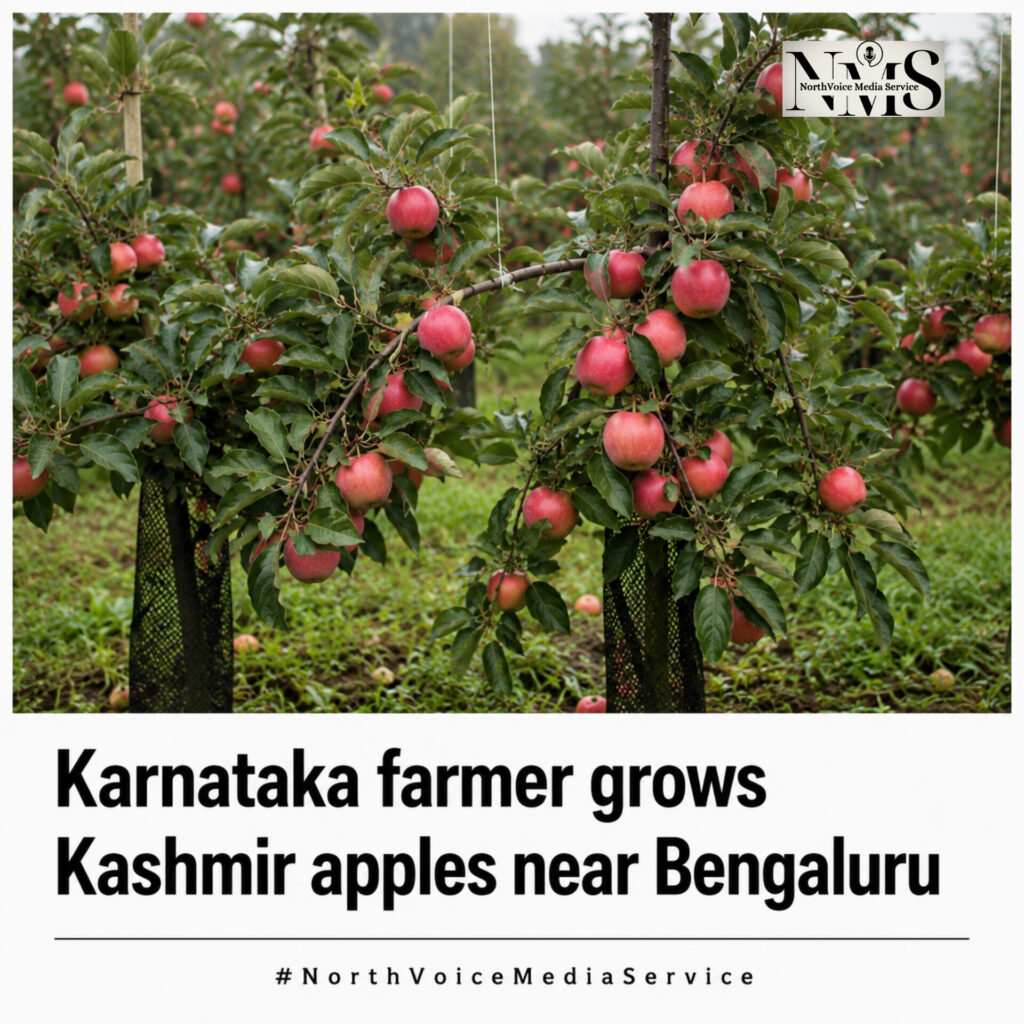
SRINAGAR: In a remarkable farming breakthrough, a farmer from Karnataka has successfully cultivated Kashmir apple varieties near Bengaluru, challenging the long-standing belief that apples can only grow in colder regions like Jammu & Kashmir and Himachal Pradesh.According to reports, Anil, a farmer from Addagallu village in Chikkaballapur taluk, turned to apple farming after suffering repeated losses in traditional vegetable cultivation, including tomato farming.Inspired by online farming videos and modern agriculture techniques, Anil decided to experiment with apple cultivation on his one-acre farmland.“I faced losses in conventional crops several times, so I wanted to try something new,” Anil said, adding that he learned about apple farming through YouTube and digital agriculture platforms.With guidance from agriculture graduate Shashikumar from Tumakuru, Anil imported Israel-origin apple saplings and planted nearly 400 apple trees on his farm.Despite Karnataka’s warm climate, the Kashmir apple varieties reportedly adapted successfully and are now producing a healthy harvest.According to the farmer, each tree is yielding nearly 10 kilograms of apples, surprising local farmers and horticulture experts who traditionally associate apple cultivation with colder Himalayan regions.Anil said the success proves that apple farming in Karnataka is possible with proper technology, irrigation methods and scientific cultivation practices.In a unique direct-to-consumer initiative, the farmer has also opened his orchard to visitors, allowing people to pluck apples directly from the trees and purchase fresh produce from the farm itself.“I want people to experience apple harvesting themselves and understand the quality of naturally grown produce,” he said.The innovative orchard has now started attracting farmers, horticulture enthusiasts and agriculture students from different parts of Karnataka who are keen to learn about alternative farming models and crop diversification.Agriculture experts believe such successful experiments could encourage farmers to shift towards high-value crops and reduce dependence on traditional farming vulnerable to weather changes and market losses.
Leave a Reply