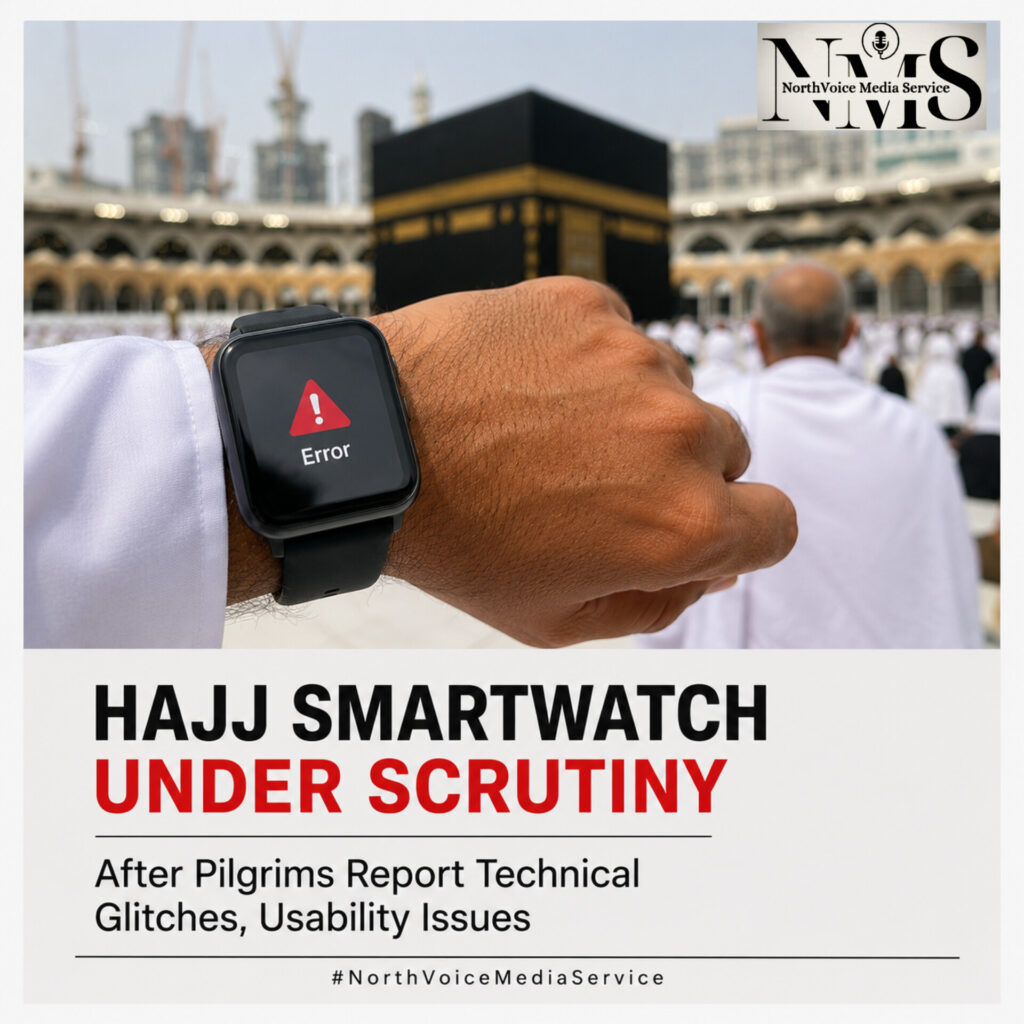
SRINAGAR: A GPS-enabled smartwatch made mandatory for Indian Hajj pilgrims this year has come under criticism after several pilgrims reportedly complained of technical glitches, charging failures and usability issues during the ongoing Hajj journey.According to a report by The Times of India, the controversy emerged amid growing concern over rising Hajj expenses after airfare charges for pilgrims reportedly increased by nearly Rs 10,000 in late April.The report said around Rs 4,332 was deducted from each pilgrim’s Hajj deposit for the newly introduced Hajj Suvidha Smartwatch, which was made compulsory this year for nearly 1.2 lakh Indian pilgrims travelling to Saudi Arabia.The GPS-enabled smartwatch was introduced by the Hajj Committee of India as a safety and crowd-management measure aimed at helping pilgrims during one of the world’s largest religious gatherings.However, several pilgrims reportedly claimed that the devices were not functioning properly, with many watches failing to switch on, losing charge quickly, or facing tracking and software-related issues.The smartwatch forms part of the official Hajj kit distributed before departure along with boarding passes, luggage tags, ID cards and passport stickers.According to the report, many elderly pilgrims and first-time users struggled to operate the device, while some were informed that activation would only take place after reaching Saudi Arabia.Reports further claimed that nearly 70 per cent of pilgrims in certain groups were unable to properly activate or use the smartwatch.The devices were supplied by Sekyo Innovations through a fast-tracked procurement process. The company reportedly follows a hybrid manufacturing model, with assembly in India while key components such as GPS modules and chipsets are sourced internationally.The smartwatch controversy has also sparked debate because several other major Hajj-participating countries, including Pakistan, Indonesia and Malaysia, reportedly continue to rely on traditional group coordination systems and mobile communication instead of mandatory wearable tracking devices.The issue has now added to broader concerns among pilgrims over increasing Hajj costs, with overall expenses for some pilgrims reportedly crossing Rs 4 lakh this year.
Leave a Reply