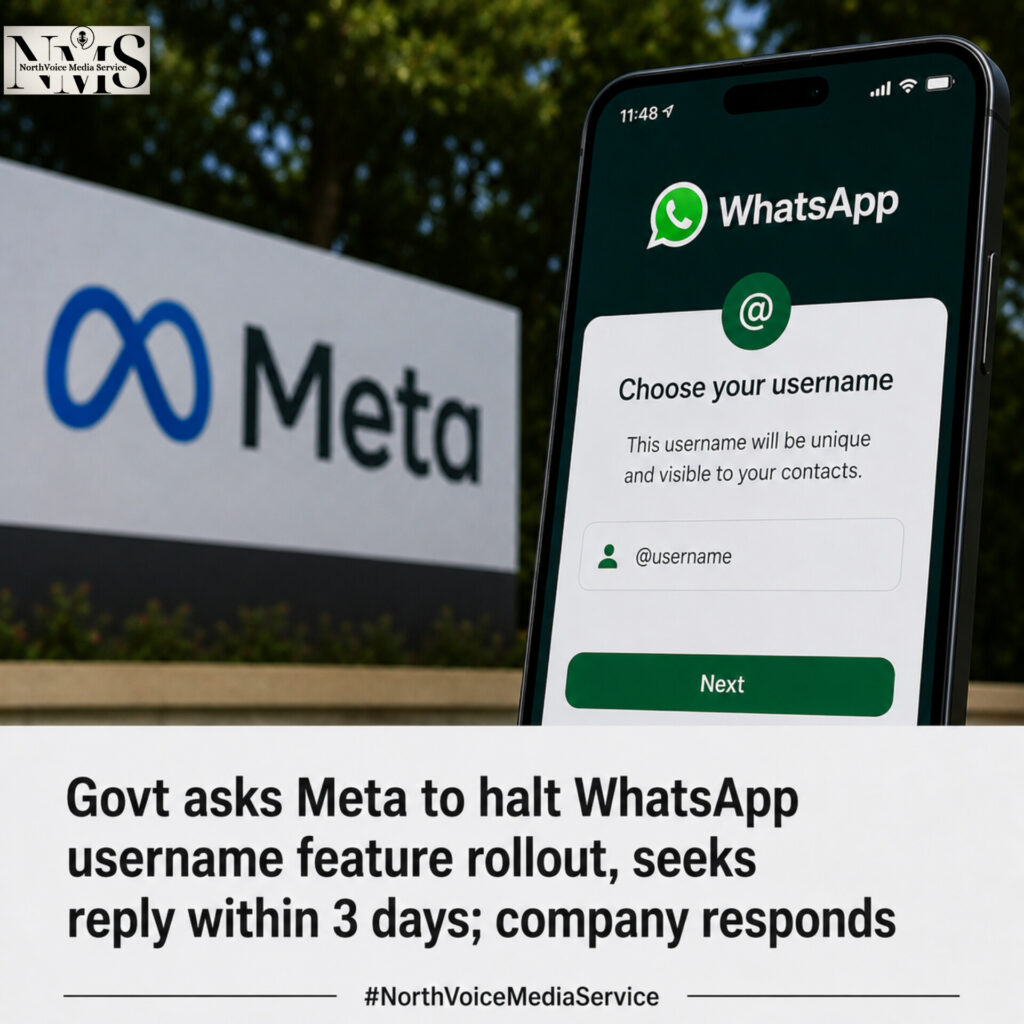
New Delhi, July 1: The Government of India has directed Meta-owned WhatsApp not to roll out its proposed WhatsApp username feature until consultations with authorities are completed. The government has also asked Meta to submit a detailed explanation, along with supporting documents, within three days.The move comes amid growing concerns over online fraud, phishing scams, identity theft, digital arrest scams, and impersonation. Officials believe the proposed WhatsApp username system, which would allow users to communicate without sharing their phone numbers, could increase the risk of cybercrime if not backed by strong safeguards.According to government sources, authorities are closely examining the WhatsApp username feature and its legal implications under the Information Technology Act and the IT Rules, 2021. Officials are also exploring legal options, including restricting or blocking the feature if it is found to pose serious security risks.In its notice to WhatsApp India, the government warned that the feature could enable identity spoofing, impersonation of individuals, financial institutions, government agencies and public authorities, making it easier for fraudsters to target users.The notice also cites provisions of the Information Technology Act, including intermediary due diligence obligations and laws relating to identity theft, online cheating, and cyber fraud. Meta has been directed to provide a detailed explanation of the feature within three days.WhatsApp RespondsResponding to the government’s concerns, WhatsApp said the username feature is still under development and will be introduced gradually later this year. The company said it has built multiple safeguards to prevent impersonation and scams.According to WhatsApp, users will still require a phone number to create an account. The platform says only people who know the exact username will be able to initiate contact, while additional protections will detect suspicious activity, limit spam, and prevent abuse.WhatsApp added that usernames are designed to improve user privacy, especially in group chats and conversations with new contacts, by reducing the need to share personal phone numbers. However, cybersecurity experts have warned that lookalike usernames could become a new avenue for online scams, phishing attacks, and impersonation unless strict verification systems are implemented.
Leave a Reply